Field notes
Contexta small history.
An opening specimen
Before knowledge had departments, the world could still sit in one room.
01 · Before the departments
A room for the almost unbelievable.
In early modern Europe, a Wunderkammer — a chamber of wonder — or Kunstkammergathered natural things, human-made marvels and instruments under one roof.
Shell beside astrolabe. Fossil beside carved ivory. Not a catalogue of the strange: a small, imperfect world assembled to be looked at, argued with, and understood.
A collection was also a portrait of the person who made it.
02 · When the shelves divided
Then the world got labelled.
Over time, collections became museums. Inquiry acquired disciplines, departments and names. The sorting made knowledge more exact, and easier to share.
But a label can arrive too soon. Sometimes the most useful thing is to leave two unlike objects together long enough for a third idea to appear.
03 · The collector, now
I collect ideas. I collect experience.
I collect questions, places, stories, contradictions, people. Things that have no obvious reason to be beside one another, until they do.
Loose specimens · 01 — 03
Curiosities, for now.
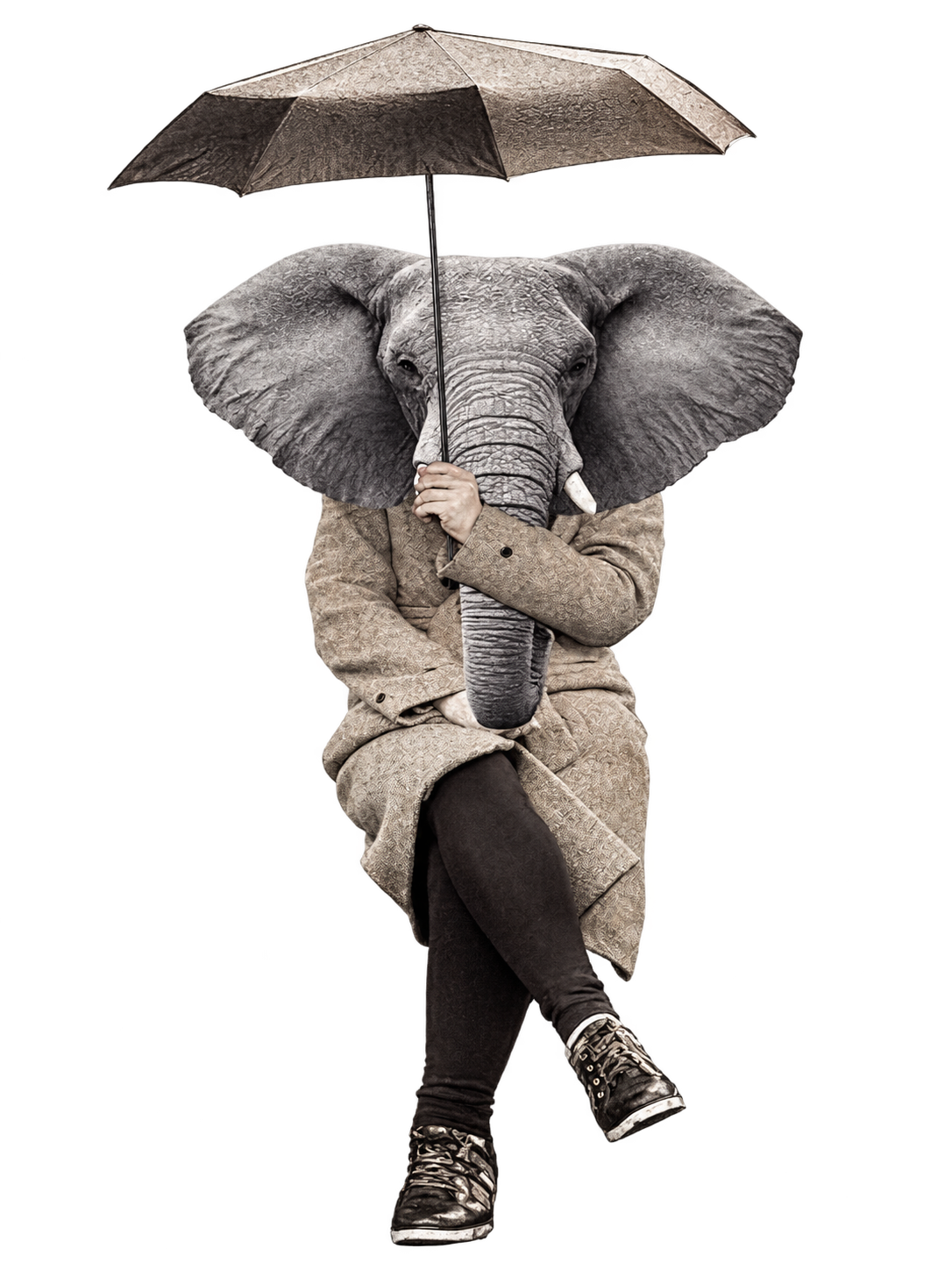
01The weather keeperElephant · umbrella · impossible poise 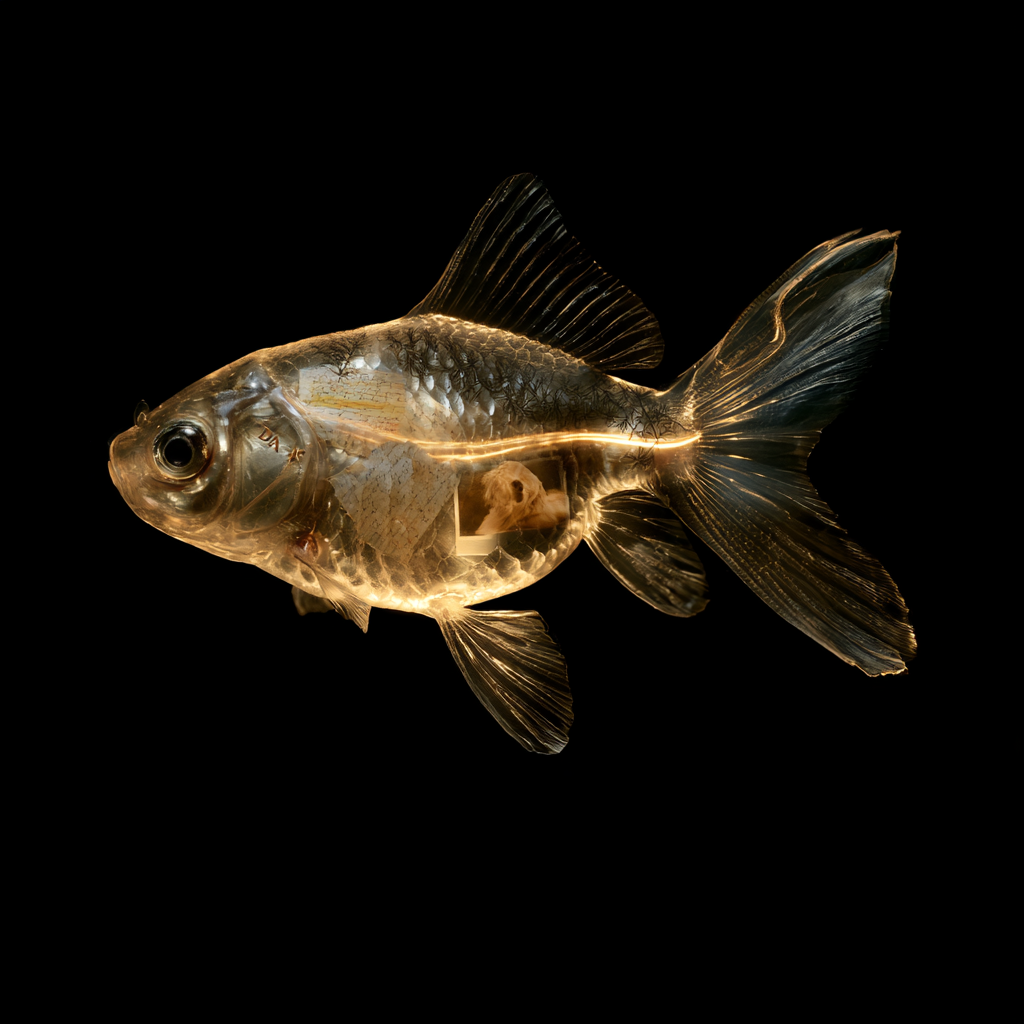
02A thought in suspensionGoldfish · memory · interior worlds 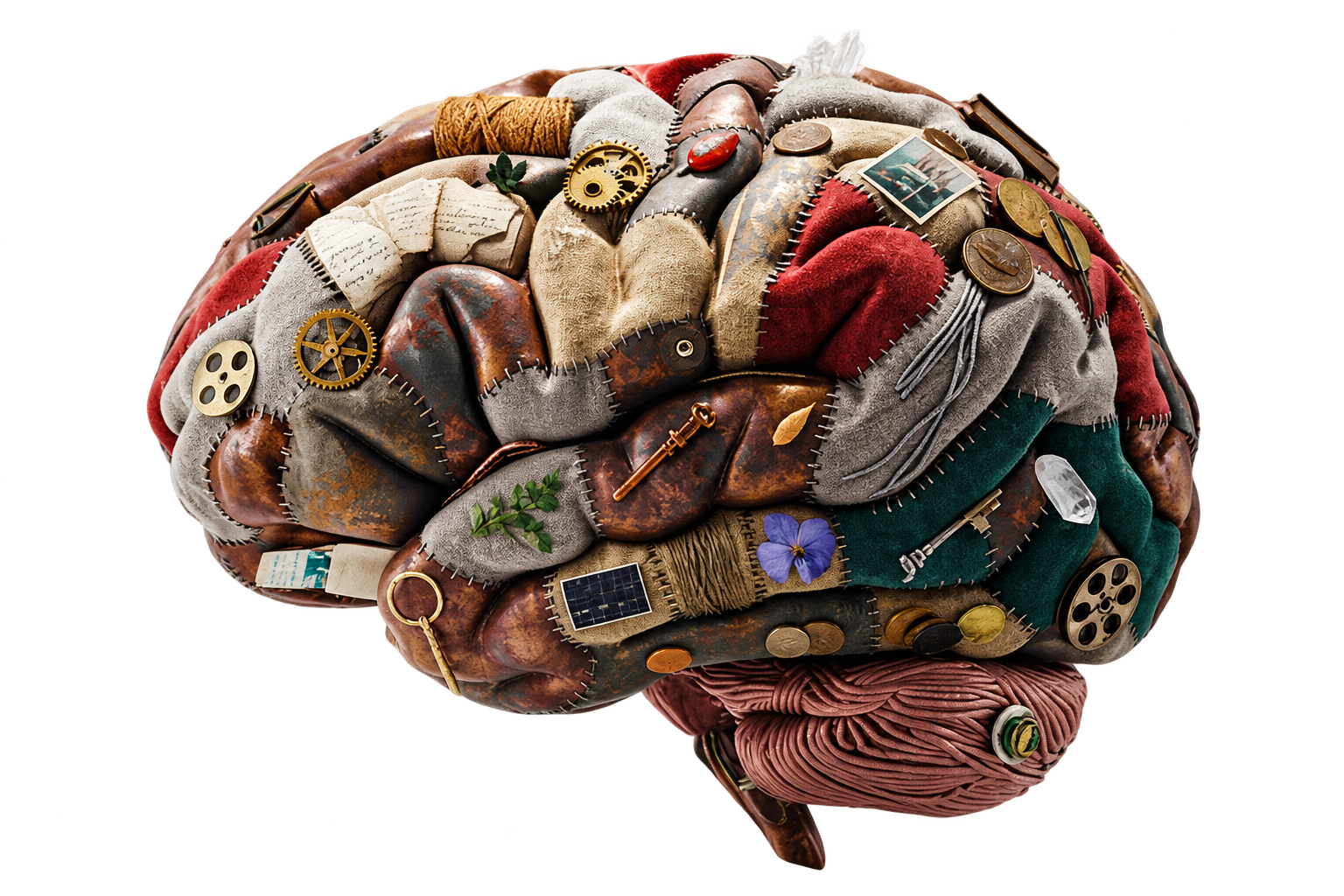
03The portable cabinetBrain · keepsakes · collected matter
04 · What the cabinet is for
The meaning is in the between.
The work moves across architecture and data, technology and people, systems and stories. I am interested in what happens when unlike things meet, and in the meaning we make there, together.
A collection is never the whole world. It is one way of seeing it.