Featured · Agentic AI
Shaping the future of business with agentic AI.
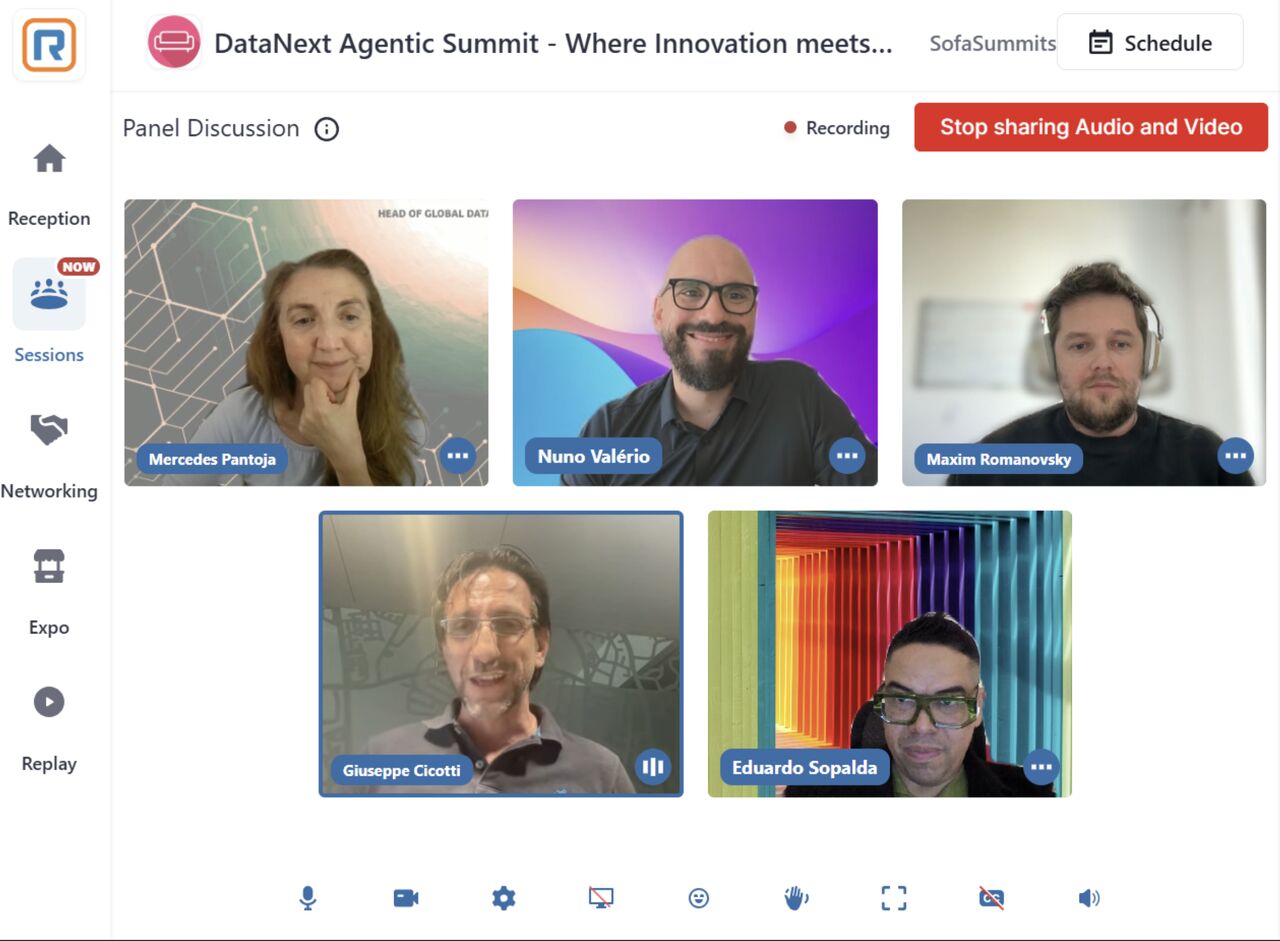
At DataNext Agentic Summit, the closing panel was on opportunities, challenges, and what responsible innovation costs when systems move faster than approval.
Field notes
Talks · panels · roundtables
The ideas I carry into rooms, and what those rooms give back.
A living index of conversations across data, AI, trust, climate, and the human choices underneath them. Different rooms. Connected questions.
Upcoming · not yet a record
26–27 October 2026 · Berlin
Chemical Automation and Digitalisation Congress. Opening panel: data and AI governance as the foundation for sustainable digital transformation in the chemical industry. Invited by BGS Group. The note opens after the talk.
4 February 2027 · Online
Panel discussion.
13–14 April 2027 · RAI Amsterdam
Speaker.
Featured · Agentic AI
At DataNext Agentic Summit, the closing panel was on opportunities, challenges, and what responsible innovation costs when systems move faster than approval.
A field record · 2026
A commencement speaker had just told graduates to “destroy AI.” A few days later, five of us spent the closing panel on a harder question: how do you govern systems that act without us, without killing what makes them worth governing?
Calling for destruction isn’t a position you can build anything on. The Luddites didn’t stop the industrial revolution; they just missed the chance to shape it. The real questions about AI are harder and more interesting. What happens when agents stop assisting us and start acting for us? Where does accountability live in an autonomous system? How do you keep humans meaningfully in the loop without turning governance into theater?
That’s the territory we went into at DataNext Agentic, with Giuseppe Cicotti (Allianz), Nuno Valério (Merck) and Maxim Romanovsky (Deutsche Bank), guided by Mercedes Pantoja (Siemens Healthineers). Insurance, pharma, banking and specialty chemicals turned out to be building the same muscle in different vocabularies. Giuseppe put it as “assurance comes before insurance.” I kept pulling us back to data integrity and the humanist case for governance. Proportional governance, with a fast lane for low risk and real scrutiny where being wrong is costly, is what lets you move at all.
Mercedes said something that stayed with me: governance starts with oneself, before the frameworks, the policies or any tooling. You can’t govern what you haven’t first examined honestly in yourself.
Destroy AI? That’s not the answer. Understand it, govern it, shape it, hold it accountable, and earn its trust through the unglamorous work of building the right foundations. Thank you to Philip Bell for bringing us together. We need more rooms like that one.
Speaker · panelist
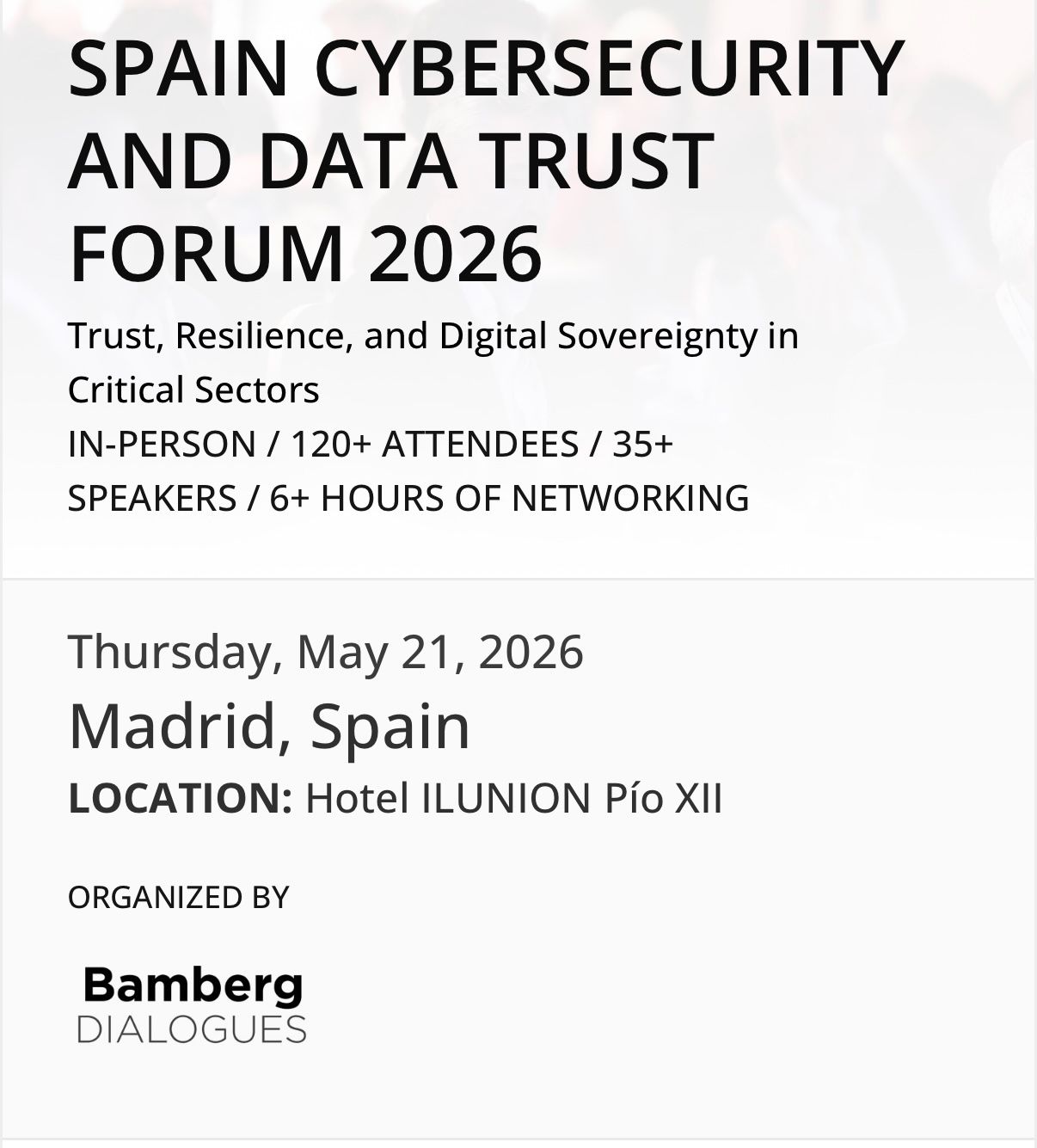
A 5 a.m. flight, terrible airport coffee, and a room of policymakers, bankers, technologists and security people circling one question: how do you build lasting trust in a world that moves faster than regulation can breathe?
What I enjoyed most wasn’t consensus but the healthy friction. Data sovereignty, shadow AI, regulation, cyber resilience: everyone came at them from a different seat. If everyone in the room says the same thing, you’re not having a conversation, you’re attending a rehearsal.
Olga Forné spoke about regulation not as a burden but as a distinctly European strength, a foundation for trust. I agree, and it deserves to be said louder. Good regulation isn’t a tax on progress; it’s part of the architecture that makes progress last. The head of governance at Banco de España reminded us this is a marathon, not a sprint. The Google voice in the room added that risk is real, but the seven plagues of Egypt are not a governance framework.
The risks we can’t ignore were there too: European data on infrastructure governed by US law, local data centres that don’t mean local control, and encryption keys sitting in the same cloud as the data they protect.
I still left hopeful. The paths differed, sometimes sharply, but the intention was the same: protect what matters, keep meaningful control, and build systems that deserve trust. Trust isn’t the nice-to-have at the end of the strategy deck. Trust is the business model.
Invited participant
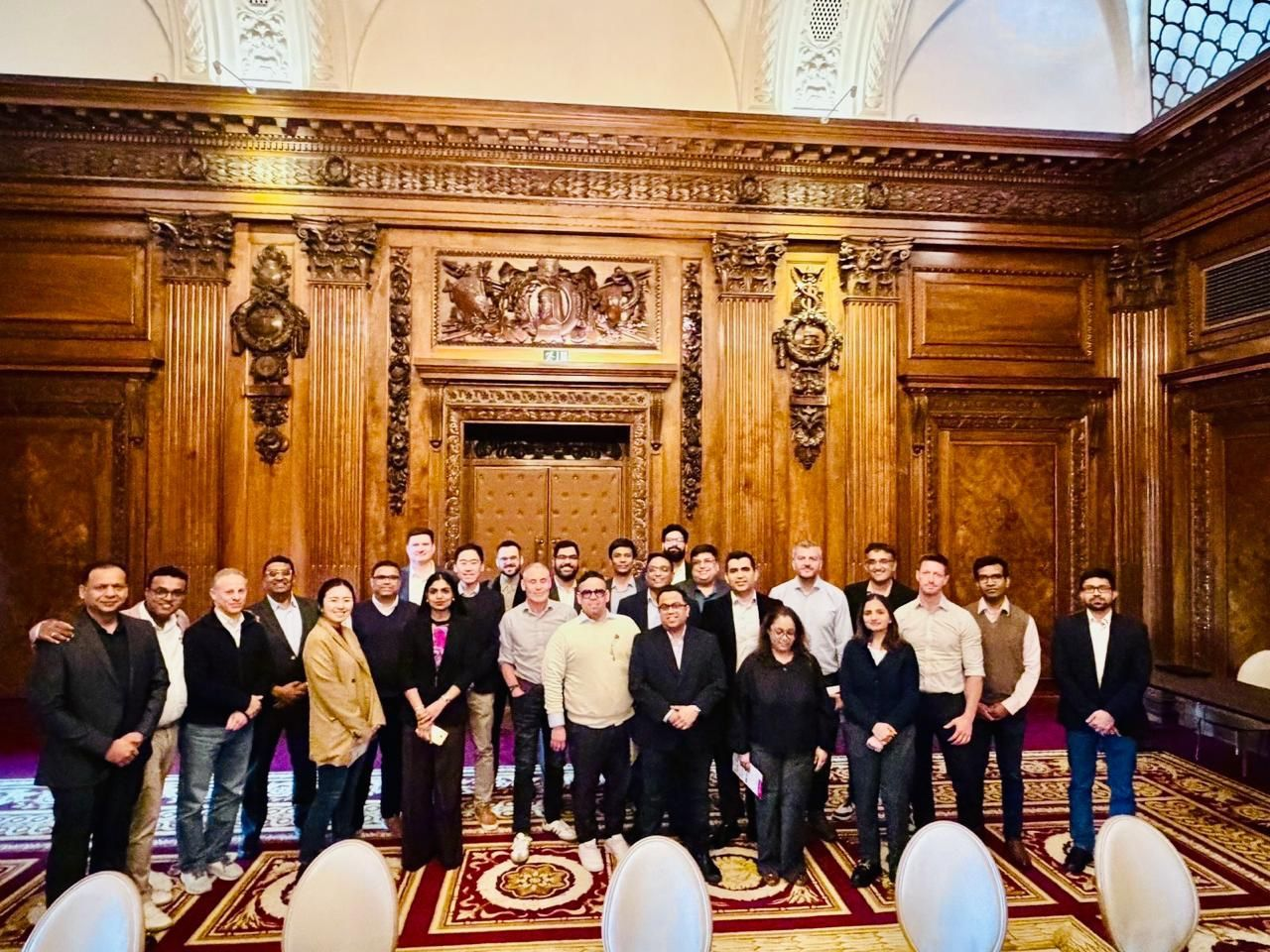
In 1946, delegates to the first UN General Assembly gathered in the UN Ballroom at Ten Trinity Square. Eighty years later, we sat in that same room, talking about agentic AI.
In 1946, delegates to the first UN General Assembly gathered in the UN Ballroom at Ten Trinity Square, people trying to agree on how a changed world should be governed. Eighty years later, over two days in May, we sat in that same room, around the same kind of tables, talking about another technology that’s changing the world: agentic AI.
You could feel it. The room still felt like a place where important decisions take shape, and AI governance is one of them. No single company, regulator or expert will get it right alone. It takes people from very different seats (growth, revenue, supply chain, data, policy) sitting down to share what’s working, admit what isn’t, and work out answers together.
We talked about agents only being as good as the data and context we give them, about keeping humans able to see and steer what agents do, and about governance as the thing that makes innovation trustworthy enough to scale rather than the thing that stops it. Conversations like this are where that work starts. Thank you, Sigmoid, for opening the room.
Roundtable participant

In about 35 minutes, Claude Code did what would normally take weeks of ESG work. I walked in expecting a smart demo and walked out thinking we’re much closer to a new operating system for climate work than most teams realise.
Invited by my friend Yvonne Espinosa, one of the founders of the Kith AI Lab, I watched Diego Espinosa, with Ben Hillier from Kith Climate, run a simulation: day one as a solo VP of ESG at a private equity firm, Q1 reporting season, no team. Working only through Claude Code, 150+ files turned into a fund tear sheet, a portfolio risk scorecard, a due diligence memo flagging a high-risk deal, and an investor deck.
What struck me wasn’t the speed but the shift. Chat helps you think and write; this helps you operate. It inferred the work plan, computed the numbers in code instead of guessing them, and reused each output as scaffolding for the next.
The answer to hallucinations was quality by design, not hope: deterministic code for the maths, checks from different angles, and the saved time spent on verification. AI doesn’t remove the need to verify; it finally gives you the time to do it properly.
My takeaway as someone in governance: if every concern becomes a roadblock, people won’t slow down, they’ll just move on without us. Climate professionals have a window to lead adoption with literacy, guardrails and a focus on outcomes. If AI compresses climate work from months to minutes, governance can’t stay quarterly and reactive either.
Invited workshop participant
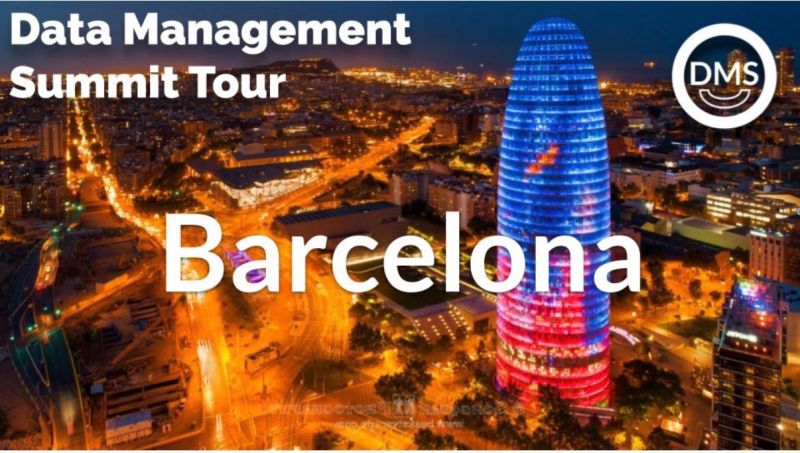
Joined as a VIP guest of DAMA España for a conversation on data governance, quality, culture, and AI in organizations.
VIP guest · attendee
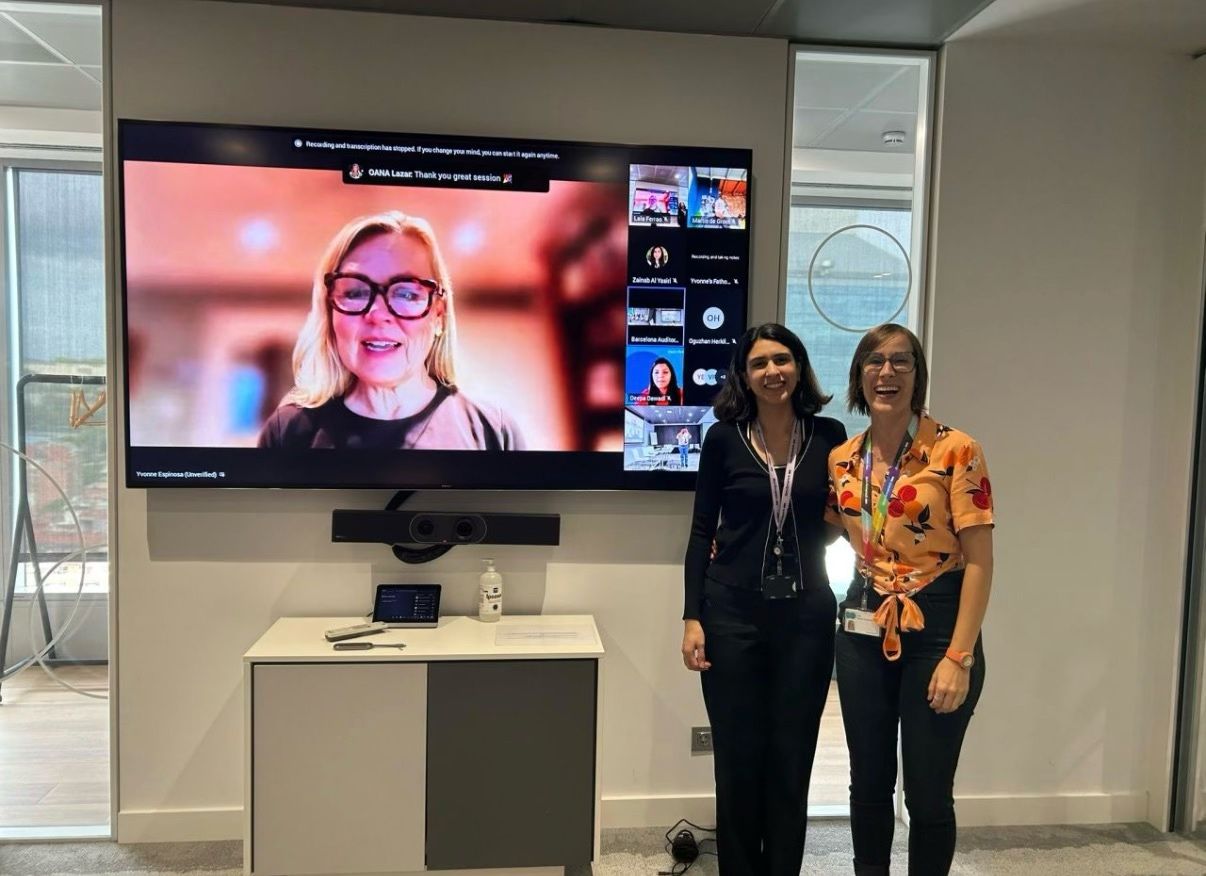
Introduced Yvonne Espinosa and Zainab Al Yasiri for a conversation on AI, confidence, curiosity, and trusting our judgment.
Introducer