Picture this: it’s a summer night in 2009. I’m standing at Galileo Galilei Airport in Pisa at 10 p.m., waiting for a tiny Fiat Cinquecento we had just rented. Ahead of us: a 50-kilometer drive to Pieve di Brancoli, a hilltop village in the heart of Tuscany. I had been dreaming of this trip — the wine, the food, the golden hills — all the clichés I wanted to make true.
My friend Daniel Keohane was at the wheel. He had grown up in Italy and knew the roads by heart — or so he claimed. I was the assigned co-pilot, which should have raised a red flag the moment he grinned and said, “Hold on to whatever you can grab.”
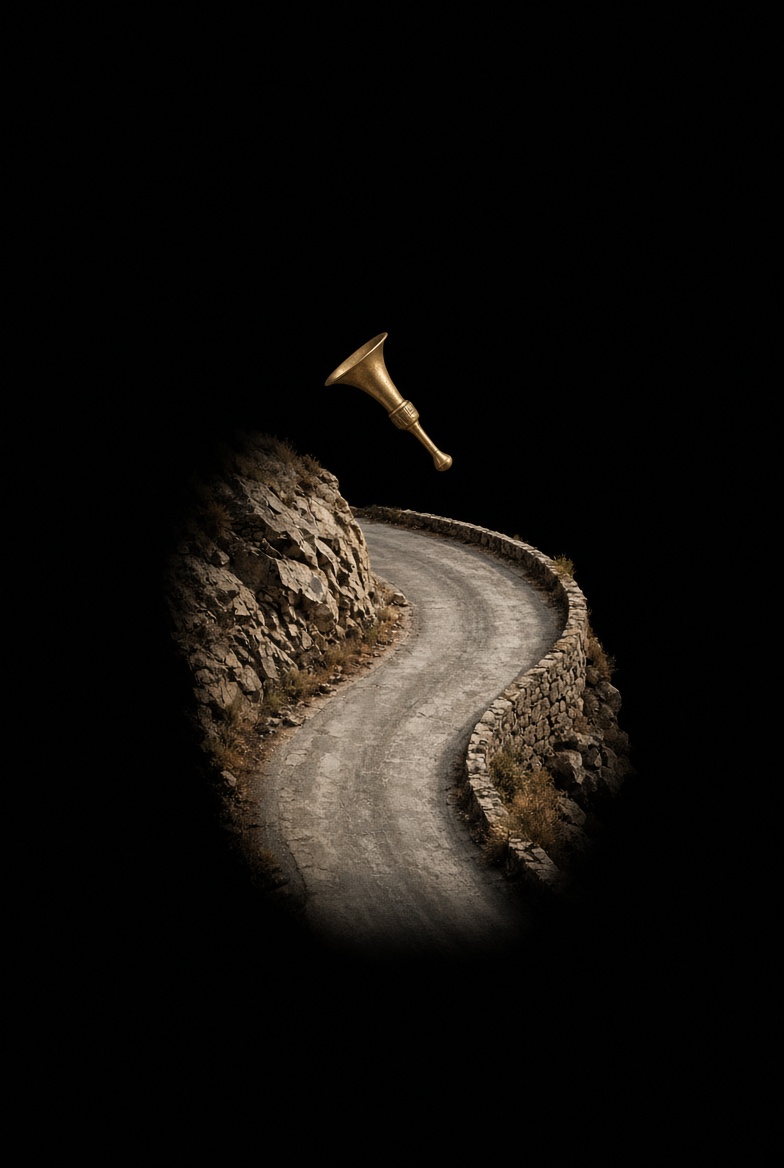
Off we went, driving through the Italian autostrada in our small but surprisingly fast Fiat. At one point, Dan turned off the main road and announced, “This is where the fun begins.” It was pitch black. We started climbing. Sharp turns, uneven pavement, no streetlights — and no visibility. I was sweating cold, clutching the door handle, wondering if I should say my goodbyes. Dan, of course, was completely at ease, occasionally honking as he swerved left and right.
When we finally arrived at his family home, his mother Gillian greeted us at the door with a bottle of local wine and a knowing smile. “How was the hill?” she asked, as if it were a rite of passage. I was still visibly shaken.
The next morning, in broad daylight, I saw the road. It was barely one lane wide, with the hill on one side and a cliff on the other. The honking? A local driving code to warn approaching cars around blind corners. It was basic, low-tech — but effective. And Dan, having done it hundreds of times, maneuvered that curve like second nature.
The Expert Behind the Curve
That moment stuck with me — not just because of the adrenaline rush, but because of what it taught me about trust, experience, and invisible signals.
Dan wasn’t reckless. He was practiced. What to me looked like chaos was, to him, a well-known sequence. He anticipated the turns, knew when to honk, how fast to go, and what to expect. His expertise wasn’t flashy; it was quiet, built over years. And it kept us safe.
The same principle applies in Customer Success and data analysis. Often, what feels like a chaotic or unpredictable environment can, in fact, be deciphered — if you know what signs to look for.
Honk Before the Curve: Data as Warning
In business, we don’t have cliffs or winding roads, but we do face customer churn, product issues, and experience gaps. A seasoned CSM knows when to “honk” — when to flag a silent risk, when a drop in product engagement isn’t just a blip, but a curve ahead.
This is where data analysis becomes your co-pilot. But only if you use it with intention. Raw data doesn’t scream; it whispers. You have to know what you’re looking at — and, more importantly, what it means.
If you’ve worked long enough with certain customer patterns, you know when a success plan is just a checkbox and when it’s a red flag. You know when a client’s silence is comfort… or a sign of disengagement. You’ve “driven that road” enough times to feel the curve coming.
Recognize Your Own Expertise
What struck me most about that night wasn’t just the ride — it was how unaware Dan was of his own expertise. To him, it wasn’t a big deal. But for me, it was survival.
Too often, we undervalue our own accumulated knowledge. We think, “Everyone knows this,” when in fact, they don’t. We must learn to lift our experience, not bury it. Expertise isn’t arrogance — it’s awareness. And it’s vital.
Whether you’re a data analyst, a Customer Success Manager, or a product designer, there are things you’ve done a thousand times that others are encountering for the first time. Don’t dismiss that. Own it. Use it. Share it.
And Yes, There Was a Goat
Of course, no story from Tuscany would be complete without a goat. Her name was Milly. She didn’t like me. She made it very clear — charging at me every time she saw me. I suppose she wasn’t too fond of newcomers either. (Rest in peace, Milly.)
But that, my friends, is a story for another article.
People in this piece: Daniel Keohane, Gillian, Milly (a goat)